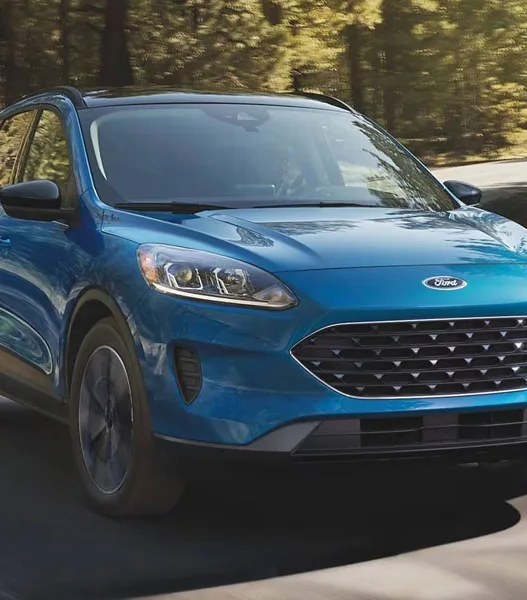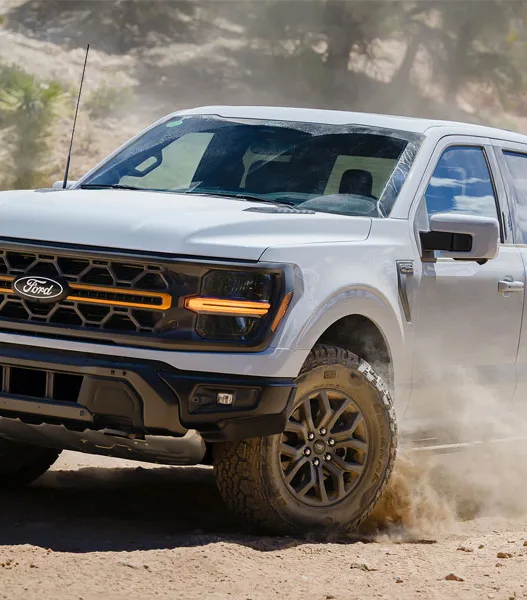





When you hear about the Ford F-150, Bronco, Explorer, and Edge, you probably expect impressive performance, efficiency, and reliability. Instead, many owners have found themselves staring down costly repairs all because of the EcoBoost engines in these cars.
EcoBoost is a series of turbocharged, direct-injection gasoline engines produced by one of the world’s best car manufacturing companies, Ford.
However, Ford is very proud of the EcoBoost engine due to its engineering brilliance. The engine combines turbocharging, direct fuel injection, and variable camshaft timing to deliver powerful performance and better fuel economy.
Unfortunately, the engineering brilliance is greatly overshadowed by life-threatening issues. Ford even faced lawsuits over this engine, according to a Daily Mail report. Let’s dive into the details in the article below.
How Did It All Start?
It all started with Louise O’Riordan, the owner of a Ford Focus equipped with a 1.0-liter EcoBoost engine, which she bought back in 2014. Even though the car drove just 32,000 miles, the engine seized on the highway, almost causing a fatal accident.
As a result, O’Riordan filed a lawsuit against the automaker. She even created a Facebook page named Ford EcoBoost Nightmare, where she shared her bad experience with the Ford Focus and encouraged other Ford owners to share their experiences.
The reason behind the car seizure appeared to be the coolant hose, which was prone to fail at high temperatures in cars built from October 2011 to October 2013. In 2015, Ford issued a service action and fixed 86% of the afflicted vehicles.
The automaker even issued a recall for its 2016-2018 Ford Focus and 2018-2022 Ford EcoSport models, specifically models equipped with Ford’s 1.0-liter three-cylinder EcoBoost engine.
But it was too late, as most of the owners had already spent their hard-earned money on repairs. Some owners reported spending around $10,500 to replace the engine. In response to O’Riordan’s case, Ford covered 60% of the repair costs before agreeing to pay the bill in full 11 weeks later.
As it was too late, the automaker was forced to pay around $1.3 billion to the affected owners, as per the lawsuit.
Ford was Sued Again For Another EcoBoost Issue
After facing a billion-dollar lawsuit, Ford was again in trouble because of its EcoBoost engine. A class-action lawsuit was filed against the automaker concerning the bigger EcoBoost V6 engine found in the Bronco and other Ford and Lincoln models.
Matthew Barkus, who owns a 2021 Ford F-150 equipped with a 2.7-liter EcoBoost engine, and Dan Silberman from New York, who owns a 2021 Ford Bronco equipped with the same power engine, filed a $5 million lawsuit against the automaker.
The lawsuit was filed in the U.S. District Court for the Eastern District of Michigan, and The Miller Law Firm, P.C., DiCello Levitt LLP, and Smith Krivoshey, PLLC represented the plaintiffs.
What were the Affected Ford Models?

Apart from the Ford F-150 and Bronco, the affected models include the Ford Edge, Explorer, Lincoln Aviator, and Lincoln Nautilus, amassing a total of 90,736 vehicles, all made between May 1 and October 31, 2021.
These vehicles were equipped with either the 2.7-liter EcoBoost or the bigger 3.0-liter variant.
A Closer Look at the Issue in the EcoBoost V6 Engine

According to a safety recall report issued by the National Highway Traffic Safety Administration (NHTSA) in August 2024, the EcoBoost V6 engine in the affected vehicles has grinding burn and over-specification hardness at the third keeper groove location in the valve.
Grinding burn is damage to the valve surface that occurs during its manufacture. It leads to the valve being too hard, making it prone to cracking and breaking. So what must have happened is that a lot of heat has been generated when grinding the valve, weakening it.
It must create cracks in the valves, which leads to catastrophic engine damage and then ultimately, loss of power.
How Did Ford Fix the Issue?
To fix the issue, Ford asked their authorized dealers to test the EcoBoost engines and replace them with a new assembly equipped with intake valves that are within specification for hardness. This fix was free of cost, with a reimbursement process ready for those who had already fixed the issue before the recall.
The automaker also created a customer satisfaction campaign, 24N12, to provide an extended warranty of 10 years or 150,000 miles. However, according to a class-action lawsuit claim, Ford has yet to provide an adequate remedy, such as a replacement of their defective valves.
They have also not compensated consumers for the amount they overpaid for their affected vehicles.
Do the Plaintiffs Have a Strong Case Against Ford?
Plaintiffs do have a strong case against Ford if there is a valid basis and enough facts to support a claim of legal rights violation. The court will make the decision based on facts and evidence.
In the case of Barkus and Silberman vs Ford Motor Company, the plaintiffs claimed that the automaker did not warn them about the problems in the EcoBoost engine.
The plaintiffs seek more than $5 million from the Ford company. The main reason behind this is that the plaintiffs claimed the automaker had not taken enough action to remedy the situation.
According to the lawsuit claims, “Ford has yet to replace the defective valves in the engine or compensate consumers for the amount they paid for the repairs”. In response to the claims, Ford said the first portion of the statement is incorrect, as they have tried to remedy the issue.
The automaker claimed that they issued a notice to its authorized dealers to inspect each affected vehicle and determine the cumulative number of engine cycles. They ensured that the problematic engine must be replaced if a car does not meet the engine cycle threshold.
The new assembly of engines was equipped with intake valves within the specified hardness range to avoid the same issue. Additionally, Ford created a reimbursement plan to cover the cost of remedies paid for by owners affected by the engine defect.
The second part of that statement may be somewhat true. The Car Lemon Law protects individuals like Barkus and Silberman who purchase vehicles that have significant defects.
According to the law, consumers can demand a refund, a replacement of their vehicle, or another form of compensation. All this concluded that the Ford seems to be ahead of the game, and the lawsuit may not go against the automaker.
Now, it is up to the court whether it will approve Ford paying the plaintiffs over $5 million.
Is the Ford EcoBoost Really a Bad Engine? What is My Opinion?
The EcoBoost engine line has been around since 2009. Ford has manufactured a lot of EcoBoost motors over the years, so it’s worth knowing whether or not you can rely on this engine line.
But determining the reliability of every EcoBoost engine would be next to impossible. That is why I will provide you with the best and worst EcoBoost engines.
1.0-liter EcoBoost: The Worst Engine

At first, the 1.0-liter EcoBoost was received well by the owners for offering a lot of power and relative efficiency. But with time, its downfall starts due to its overly complicated design. This engine has a wet timing belt, lubricated by engine oil, while other engines have a dry one.
In my opinion, the wet timing belt is a complete mechanical nightmare when trying to do any maintenance, as it involves removing the engine from the car. Additionally, sometimes the teeth on the timing belt can detach themselves from the belt and clog the oiling system.
1.6-liter 4-cylinder EcoBoost Sigma: Worst Engine

The 1.6-liter 4-cylinder EcoBoost is the most infamous engine. It was first used in the Ford C-Max and Focus. This engine topped out at 197 horsepower, but several issues outperformed it, such as breakdown of fuel lines, coolant intrusion, overheating, and catastrophic engine damage that also resulted in multiple recalls.
In fact, news also came out that an African man died when his Ford Kuga, equipped with a 1.6-liter 4-cylinder EcoBoost engine, caught fire and trapped him inside.
EcoBoost 1.5-liter 4-cylinder Sigma: Worst Engine

The EcoBoost 1.5-liter 4-cylinder was announced at the 2013 Shanghai Motor Show. This engine debuted in China at a time when they were putting any gas-powered vehicles with an engine smaller than 1.6-liters in the category of energy saving.
Even though Ford touted the EcoBoost 1.5-liter engine to have improved performance and fuel economy, it was built on the same architecture as the 1.6-liter. So it is obvious that the 1.5-liter engine experienced many of the same issues as the 1.6-liter.
In fact, the 2020-22 Ford Escape models are experiencing the risk of engine fire due to fuel leaks that leads to a recall.
In 2020, a class-action lawsuit was filed against Ford, alleging the automaker already knew about the defects in 1.5-liter and 1.6-liter engines. In fact, they did nothing more than provide temporary solutions, like the installation of a coolant level sensor.
EcoBoost 1.5-liter Dragon: Very Reliable Engine

Introduced in 2015, the EcoBoost 1.5-liter Dragon is considered a reliable engine. It is equipped with the cylinder deactivation tech that increases its efficiency while combining direct fuel injection with port fuel injection.
Currently, this engine is being used in Ford Focus, Escape, Fiesta trims, and the popular Bronco Sport. Only common issues found in the engine that almost every EcoBoost engine tends to experience are carbon buildup and the occasional fuel pump problem.
EcoBoost 2.7-liter Nano: Reliable Engine

Ford introduced the 2.7-liter Nano engine in 2015, mostly used in the Ford F-150. The engine received the best response due to its reasonable pricing and handling. However, some owners complained that it didn’t sound or feel like a truck engine.
In 2018, Ford made some significant changes to the engine, such as adding port fuel injection to the direct injection system, installing a new camshaft to reduce the weight, and incorporating a stronger dual-chain drive system to improve the reliability.
Additionally, the turbo controls were reimagined, and the oil pump was replaced to improve flow and reduce parasitic losses.
EcoBoost 3.0-liter Nano: Very Reliable Engine

Introduced in the 2017 Lincoln Continental, the 3.0-liter Nano comes with an increased cylinder bore, lengthened piston stroke, and a cast aluminium block, with most of the architecture remaining the same as the 2.7-liter Nano V6 engine.
The 3.0-liter engine can get up to 400 horsepower and is considered very reliable, with the only problem being the use of a plastic oil pan attached to an aluminium block, which tended to leak from the seal between the two materials.
EcoBoost 3.5-liter Cyclone: Great Engine

The 3.5-liter engine powered the 2009 Lincoln MKS, promising V8 power paired with the fuel efficiency of a V6.
According to a 2005 report, it was revealed that the Ford 17 GT, equipped with a six-cylinder 3.5-liter engine, produced a whopping 647 horsepower and 550 pound-feet of torque, while a Ford GT with a 5.4-liter supercharged V8 engine pumped out just 500 horsepower and 500 pound-feet of torque.
Impressive!
These days, several models are using this Cyclone engine. While the 3.5-liter Cyclone is considered a great engine with a variety of applications, it comes with some common issues, like the Timing chain problem.
However, Ford fixed these issues in its second-generation engines.
Wrapping Up
If you ask me, Ford’s EcoBoost engines remain reliable, offering impressive performance and efficiency, with cutting-edge technology. But, we also can’t neglect the mechanical nightmare and the pricey repairs thousands of owners experienced.
Multiple billion-dollar lawsuits filed against Ford can’t hide the dark side of EcoBoost engines. From this article, it is clear that not all EcoBoost engines are created equal. That is why I have provided you with the list of the worst and best versions of these engines to make the right choice.
At the end, Ford’s engineering brilliance is undeniable, but sometimes brilliance without reliability is like a time bomb. So, if you’re looking to buy a Ford car with the EcoBoost engine, make sure to choose a safe and reliable version because not all boosts are worth your life.
Sources: Ford, Wikipedia, CarBuzz, CarComplaints, SlashGear