





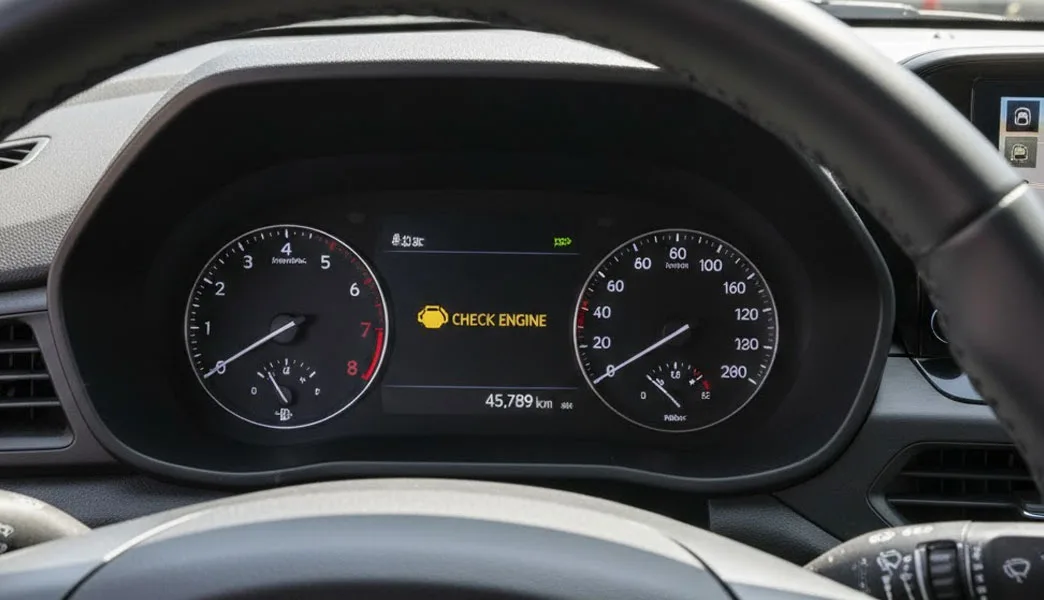
I drive a 2024 Hyundai i20 with about 50,000 miles. This morning, I left for work, and about a minute into my journey, the check engine light started flashing. I panicked and pulled over to the side of the road.
I immediately turned off the engine and checked whether my car was on fire. I’ve previously written an article on a blinking check engine light, in which I clearly mentioned that the light indicates a severe engine misfire and requires immediate attention.
If you keep driving, it can damage your engine and catalytic converter. But while driving back home, the engine light didn’t come back on. So, I decided to drive back to work. Yes, it might sound like a stupid decision, but it was only a 5-minute journey, and I kept my eyes glued to the light the whole time.
I drove back home after my shift, and the engine light never came back on. Should I still take my car to a mechanic? Or would it have just been a temporary issue that fixed itself?
I’ve Googled these questions, and the answers I found might also help you, so I’d like to share everything I’ve learned from this experience below.
What Does Flashing Check Engine Light and Then Stops Actually Mean?
In my previous article, I explained that a flashing check engine light is a clear warning to the driver that something isn’t functioning as it should. Technically speaking, your vehicle’s onboard computer detects a problem.
There are two scenarios for a flashing check engine light: it can flash and then go solid, or it can flash and then stop.
If a check engine light flashes and then goes solid, it indicates a severe engine misfire, a catalytic converter problem, or a fuel system failure. On the other hand, if the check engine light flashes and then stops, it indicates a temporary issue that could lead to serious problems.
Sometimes your car experiences a minor engine misfire, a loose gas cap, or a catalytic converter may be on the verge of failure.
I took a sigh of relief after hearing that my problem was temporary. But it doesn’t mean you can ignore it.
Check Engine Light Flashing, Then Goes Solid vs Flashing Light, then Stops
| Flashing Check Engine Light, Then Goes Solid | Flashing Check Engine Light, Then Stops | |
|---|---|---|
| Meaning | Starts as a severe misfire, then becomes a persistent engine fault | A temporary or intermittent severe misfire that stopped on its own |
| Severity | Still serious—misfire occurred and an issue remains | Serious but unpredictable; may or may not return |
| Engine Behavior | Engine may run rough, shake, idle poorly, or have reduced power after it goes solid | Engine often feels normal |
| Common Causes | Failing ignition coil, worn spark plugs, clogged injector, vacuum leak, sensor failure | Bad/contaminated fuel, moisture in ignition, weak spark plug, temporary sensor glitch |
| Risk Level | High risk: If you continued driving, it can cause the engine failure. | Medium risk: Misfire may return and harm catalytic converter or cause a breakdown |
Common Reasons Check Engine Light Flashes and Then Stops
Here are some common reasons the check engine light flashes and then stops.
1. Engine Misfire
One of the most common reasons why the check engine light flashes is engine misfire. And the light stops after some time indicates the misfire is minor. The engine misfire occurs when the fuel mixture in one or more cylinders fails to ignite properly.
Several reasons, such as spark plug issues, injector problems, oxygen sensor malfunctions, and ignition coil failure, can cause it. Sometimes, the engine misfire is accompanied by the car shaking when you accelerate.
2. Catalytic Converter Problem
A catalytic converter reduces harmful emissions from vehicles. If the converter fails, it can affect the vehicle’s emissions control system, triggering the check engine light.
If you’re experiencing poor acceleration, it may indicate a catalytic converter failure.
3. Loose Gas Cap
If the gas cap is loose, missing, or damaged, it can allow the gasoline to come into contact with outside air. As a result, the emission control system may detect an abnormal pressure in the tank, triggering the check engine light.
4. Fuel System Issues
Fuel system issues, such as a failed fuel pump, a malfunctioning fuel injector, or a clogged fuel filter, can also cause the check engine light to blink. It creates an imbalance in the air-fuel mixture, causing the problem.
If the light stops, there is a temporary issue, like bad fuel. If the fuel is mixed with water, dirt, or ethanol, it can make the engine stumble for a moment.
5. Temporary Sensor Glitches
Sometimes, a crankshaft position sensor, camshaft sensor, or O2 sensor sends an incorrect signal for a split second, flashing the check engine light. And when the signal returns to normal, the light stops flashing.
6. Cold Start Issues
During cold mornings, the air-fuel mixture can be slightly off for a moment, especially if the spark plugs are too old. This small imbalance can cause a temporary engine misfire, triggering a flashing light for a few seconds.
7. Low Battery
If the electrical system is weak, it can momentarily drop voltage to ignition or fuel components. It ultimately leads to a low battery or a weak alternator, causing a split-second misfire.
In my case, it was a spark plug issue causing the check engine light to blink.
Can I Continue Driving If the Check Engine Light Flashes and Then Stops?
Have I done the right thing by continuing to drive even after the check engine light flashed and then went out?
Google replied, It is safe to drive if the engine feels normal, there’s no shaking, no loss of power, and no weird smells. You can cautiously drive a few minutes to get home or to a repair shop.
In my case, I decided to continue driving because everything felt normal after the check engine light stopped flashing. The drive was only five minutes, and I was watching the dashboard like a hawk, but that still doesn’t mean you can ignore the light.
You should treat it like an early indication that something severe is going to happen.
However, there are situations where you should not drive at all. If you notice your vehicle’s engine is shaking, losing power, or making unusual noises, it’s safer to pull over to the side of the road, as the engine is struggling and could face further damage.
What Should I Do After the Flashing Check Engine Light Stops?

You can breathe a sigh of relief when you notice the check engine light stops flashing. But remember that a flashing light never comes on by accident. Your vehicle must have experienced a severe problem, like an engine misfire for a brief second, which you shouldn’t ignore.
Therefore, you should immediately visit a mechanic even if the car feels perfectly normal. A quick diagnostic scan can tell you exactly what triggered the light. It will help to catch the problem before it becomes an expensive repair.
How Will Mechanics Diagnose the Problem?
After learning about the severity of a flashing check engine light, I immediately took my car to a mechanic to find out exactly what was wrong. Let me share my experience at the mechanic shop with you.
- OBD-II scan: The mechanic’s first step was to run an OBD-II scan. The vehicle’s computer usually stores “pending” or “history” codes that reveal exactly what the engine was struggling with. Misfire-related codes often start with P0300 (random misfire) or P0301–P0304, depending on the cylinder.
- Live Data: The mechanic didn’t stop there. Then they checked the live data from the engine while it was running. It displayed real-time information, including engine RPM, fuel trim, air-fuel ratio, ignition timing, and more. If something is off, the data will show inconsistencies.
- Inspect the Ignition System: The mechanic also checked the fuel pressure, examined the injectors, and looked for clogs or leaks. A weak fuel pump or dirty injector can create a temporary misfire, triggering the check engine light.
- Deeper Inspection: Lastly, the mechanic conducted a deeper inspection, including testing for vacuum leaks, checking compression, inspecting the catalytic converter, and evaluating sensors such as oxygen sensors.
How to Prevent the Check Engine Light From Flashing in the Future?
If you’ve experienced a flashing check engine light that stops after some time, the good news is that it is preventable with simple habits and regular maintenance.
- Regular Spark Plug Replacement: Make sure to replace your old spark plugs. Spark plugs age over time, usually every 30,000 to 60,000 miles, depending on your car. Once they start wearing out, the misfires become common. You must replace your old spark plugs on time to keep your ignition system healthy and reduce the chances of the check engine light flashing.
- Avoid Using Low-Quality Fuel: Don’t use low-quality or contaminated fuel, as it can cause your engine to stumble, misfire, or run unevenly. Make sure to stick to the trusted fuel brands. So, if you ever feel a rough idle or hesitation right after refueling, it’s likely bad fuel.
- Stay Attentive to Early Warning Signs of Misfires: You must always pay attention to the early warning signs of misfires. Your vehicle usually gives subtle hints long before the check engine light flashes, such as sluggish acceleration, a shaky idle, a slight vibration, or reduced fuel economy. These symptoms might seem minor at first, but they can lead to costly repairs if you ignore them. Make sure to address these signs as soon as possible to prevent the check engine light from flashing in the future.
- Routine Scanning: Scan your car with an inexpensive OBD-II scanner once in a while. It will help you to highlight small issues before they become big ones. Early diagnosis will also prevent the catalytic converter from failing. Misfires send unburned fuel into the exhaust system, and over time, that fuel can overheat and destroy the catalytic converter. If you fix the misfire early, it can save you thousands in repairs.
Wrapping Up
At the moment when the check engine light started flashing, my heart stopped beating. Fortunately, the light stopped after some time, and I drove back home safely. But after looking back at the whole experience, I’ve learned my lesson that flashing light wasn’t a joke, as it was my engine’s way of warning me that something serious had happened, even if only for a few seconds.
It could be a sudden misfire, or it could point to a bigger issue waiting to show up again. My car was running fine, but I still had to take it to the mechanic to find the real culprit.
It’s frustrating, and it makes you question whether you should worry or just move on. But after going through this myself, here’s what I can confidently say: don’t panic, don’t ignore it, and don’t wait too long. Visit the mechanic immediately and have the issue fixed before it gets worse.
Sources: Personal Experience, JAK Electronics
Frequently Asked Questions
1. Why Did My Check Engine Light Flash and Then Turn Off?
A flashing check engine light usually means your engine has had a severe misfire. If it stops flashing, the misfire may have been temporary, caused by bad fuel, moisture, a weak spark, or a sensor glitch.
2. Is it Safe to Drive If the Check Engine Light Stops Flashing?
If the car feels normal (no shaking, no loss of power, no strange smells), it’s usually safe to drive a short distance. But you shouldn’t ignore it for long.
3. Can a Flashing Check Engine Light Fix Itself?
Temporary misfires can correct themselves, but that doesn’t mean they won’t return. It’s better to treat it as a warning and get your car scanned.
4. What are the Most Common Causes of a Flashing Check Engine Light?
A flashing check engine light is caused by bad spark plugs, failing ignition coils, clogged fuel injectors, contaminated fuel, vacuum leaks, or faulty sensors.
5. Should I Visit a Mechanic Even If the Check Engine Light Stops Flashing?
Even if everything feels normal, you should definitely take your vehicle to the mechanic, as it is an early reminder that something severe is going to happen. Your car’s computer likely stored a “misfire” or “pending” error code. A mechanic can read these codes and tell you what caused the flashing.
6. Can Bad Fuel Cause the Check Engine Light to Flash?
Low-quality or contaminated fuel can make your engine stumble or misfire suddenly.
7. How Do I Know If the Misfire is Serious or Minor?
If the check engine light flashes along with shaking, rough idling, power loss, fuel smell, or strange noises, it’s serious. If the light flashed once but the engine feels smooth afterward, it was likely a temporary issue—but still needs attention.
8. Can Weather or Moisture Cause the Check Engine Light to Flash?
Moisture inside ignition coils or spark plugs can cause momentary misfires, especially after rain or a cold start.
9. Will an OBD-II Scanner Show the Problem Even If the Check Engine Light is Off?
Your car stores misfire codes and freeze-frame data. A scanner can still pick up what happened, even if the light isn’t currently on.


